Special Strike Shooter
FIRE GAMEAdventure
4.6657.00 Reviews
- Version
- 2.9.7
- Installs
- 10.00M
- Age Rating
- Mature 17+
Screenshots
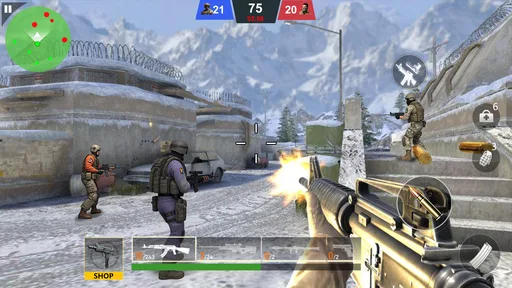
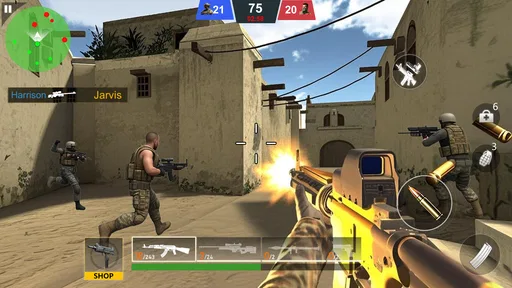
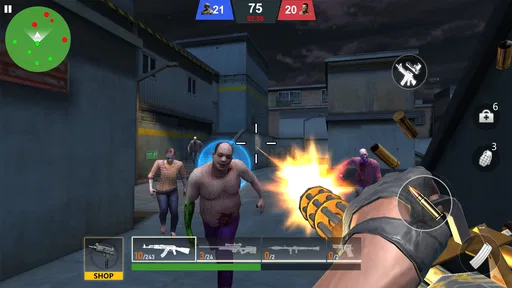
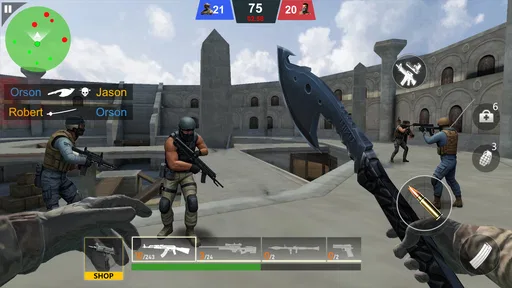
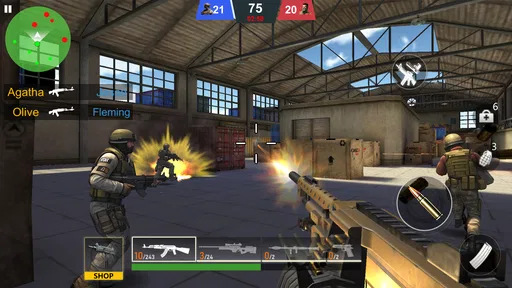
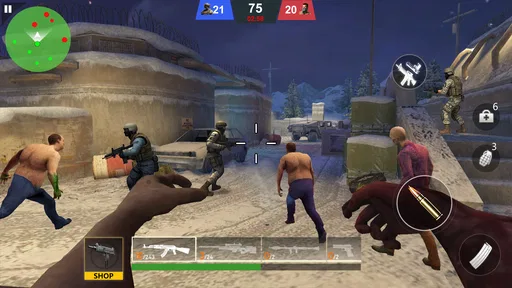
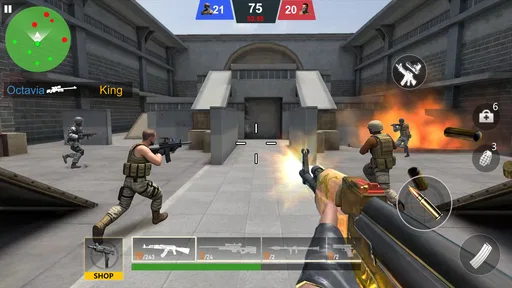
Our Review of Special Strike Shooter
 Analysis by Appyee
When I first tried Special Strike Shooter, I approached it as a quick mobile action game rather than a full replacement for a console-style shooter. That turned out to be the right expectation. This is a free adventure game from FIRE GAME built around multiplayer first-person shooting, with a modern counter-terrorist theme and short bursts of combat that suit a phone surprisingly well. Its strongest quality is not simply that it lets you shoot online; it is the way a match can turn a spare few minutes into a focused test of movement, aim, and reaction.
The game has been available since July 24, 2017, and its continued visibility is easy to understand. It has passed ten million installs and holds a 4.6 average from roughly fifty-four thousand ratings, while the store shows 657 written reviews. Those figures suggest a large audience, but they do not automatically make it the right choice for everyone. In my experience, the real question is whether you enjoy compact mobile firefights and can accept the compromises that come with playing a first-person shooter on a touchscreen.
Why the multiplayer shooting focus matters
The central capability here is multiplayer FPS combat designed for mobile play. That sounds familiar because the category is crowded, but the practical effect is important: the game asks you to make decisions quickly without requiring a long session. You are not entering it for a slow, story-heavy adventure. You are entering to read a battlefield, find an opening, fire accurately, and recover when another player catches you off guard.
I found that this focus gives the game a clear rhythm. A phone session can begin casually, but once a round starts, the relaxed feeling disappears. I have to watch corners, avoid exposing myself unnecessarily, and decide whether chasing an opponent is worth leaving cover. That small decision-making loop is what keeps the experience engaging. The shooting itself is only half the appeal; the other half is learning when not to shoot.
The counter-terrorist setting also gives the action a recognizable shape. It frames the matches as tactical confrontations rather than open-ended exploration. That does not make the game a military simulation, and I would not recommend approaching it with that expectation. Instead, the theme provides a familiar backdrop for direct, competitive encounters. Players who want a quick route into mobile FPS action will understand the premise immediately.
One useful way to think about the game is as a reaction test with a tactical layer. Fast fingers help, but rushing everywhere is not a reliable strategy. The touchscreen makes precision more demanding than using a controller or mouse, so positioning becomes especially valuable. If I reach a fight already exposed, a small aiming error can decide the outcome. If I choose a better angle first, I have more time to correct my aim.
The best matches reward restraint as much as aggression. That is one of the less obvious lessons I took from playing. New players often focus on firing speed, yet a brief pause behind cover can be more useful than charging toward every visible opponent. The game’s multiplayer format makes this lesson immediate because human opponents do not behave as predictably as basic computer-controlled targets.
How the controls feel during a real match
Playing an FPS on a phone always involves a compromise between accessibility and precision. Special Strike Shooter gets its value from making that compromise manageable rather than eliminating it. I can pick it up without studying a complicated interface, but I still need time to develop a comfortable finger position. The first few sessions are better used for learning how the screen responds than for judging my performance.
My practical advice is to avoid changing several control habits at once. First, concentrate on keeping the view steady while moving. Then work on turning toward threats without dragging too far. Once that feels natural, start practicing short corrections instead of large swipes. This matters because touchscreen aiming often fails through overcorrection: I see an opponent, move quickly, pass the target, and then lose another moment trying to return to it.
That workflow also explains why the game can feel uneven from one session to another. When my hands are settled and I am paying attention, the action feels responsive and satisfying. When I am playing one-handed in a distracting environment, the same firefight becomes much harder to manage. This is not a title I would choose while walking, commuting in a crowded vehicle, or trying to divide my attention between the match and another task.
A larger screen can make the experience easier to read, especially when several visual elements compete for attention. However, I would not treat screen size as a substitute for practice. A bigger display may help me see what is happening, but it does not automatically improve timing or decision-making. The more important adjustment is learning to keep my view controlled while moving toward a useful position.
For a better everyday routine, I would play with both hands, use headphones if the surroundings are noisy, and reserve a few opening moments of each session for observation. I do not need to rush immediately. Watching how opponents approach gives me information about where the next engagement is likely to happen. That small habit can make the game feel less random and helps conserve attention for the moments that actually matter.
A realistic use case for short sessions
Imagine having a short break between errands or after finishing a study task. You want something more involved than a puzzle but do not have time for a long campaign. This is where the game fits best. I can start a match, focus intensely for a limited period, and put the phone away without needing to remember a complicated story or return to a large open world.
The same quality can be a weakness if you want a relaxed game. Multiplayer shooting keeps the pressure high, even when the session is brief. A poor round can leave me wanting to try again immediately, which is entertaining but not always ideal when I intended to take only a quick break. I recommend setting a stopping point before starting if you are prone to extending “one more match” into a much longer session.
It also works well for players who enjoy improving through repetition. I can focus on one skill at a time: keeping a tighter view, choosing safer routes, or reacting sooner when an opponent appears. That gives short play sessions a purpose. Instead of measuring enjoyment only by winning, I can leave a match knowing what I want to handle better next time.
Where the game sits beside other mobile shooters
Compared with a large, feature-heavy mobile shooter, Special Strike Shooter feels easier to approach. I do not need to treat it like a second job or learn a broad ecosystem before having fun. Its direct counter-terrorist framing gets me into the action quickly, which is useful if I want straightforward FPS play rather than an enormous competitive package.
The trade-off is depth. Players who prefer extensive progression, a broad collection of modes, elaborate customization, or a more polished console-like presentation may find other shooters more satisfying. I would choose those alternatives when I want a long-term hobby with many systems to master. I choose this game when I want the basic pleasure of aiming, moving, and surviving a firefight without too much ceremony.
It is also different from offline adventure games. Those usually give me control over pacing, while multiplayer combat makes the pace dependent on other people. That dependence creates memorable tension, but it can also make a session feel less predictable. If you want to pause freely, explore at your own speed, or play without competitive pressure, a single-player adventure is probably a better match for your habits.
The trade-offs I would consider before installing
The mature rating of 17+ is an important part of the decision. Parents should not treat this as a general-audience action game simply because it runs on a phone. The shooting theme and competitive presentation are aimed at older players, so it belongs on a device and account appropriate for that audience.
The game is free to download, which makes trying it low-risk, but it includes in-app purchases ranging from ninety-nine cents to nineteen dollars and ninety-nine cents per item. I would decide in advance whether I am comfortable spending anything. Free entry is helpful, yet purchase options can change how a player approaches a game, especially when the temptation is to buy something during an exciting or frustrating session.
Another consideration is the age of the release. Having launched in 2017, it does not present itself as a brand-new experiment. That can be positive for someone who wants an established mobile shooter with a familiar structure, but players seeking the newest visual style or the freshest design ideas may notice that it feels less current than recently released competitors. I see it as a practical, accessible option rather than a showcase for the latest mobile technology.
The current version is 2.9.7, and the listed minimum requirement is Android 7.0. That makes the game relevant to people who are not using the newest phone, although actual comfort will still depend on the device and the player’s control preferences. I would leave enough storage and close distracting background activity before a serious session, not because that guarantees performance, but because mobile shooters are more enjoyable when the phone is not being asked to juggle too many tasks.
There is also an emotional trade-off. Competitive games can make improvement feel rewarding, but they can make mistakes feel personal. I have learned to judge a session by the quality of my decisions rather than by one unlucky exchange. If you dislike losing to human opponents or become irritated when a round goes badly, the multiplayer focus may outweigh the game’s convenience.
Small habits that improve the experience
My first practical tip is to treat the opening of a round as information-gathering time. Instead of immediately exposing myself, I look for the safest route toward a useful angle. This reduces panic and helps me understand the flow of the match. It is a simple habit, but it changes the game from constant reaction into deliberate movement.
Second, I would avoid practicing aim only in dramatic encounters. Ordinary movement is where many mistakes begin. If I keep dragging the view too widely while walking, I arrive at fights already misaligned. Short, controlled adjustments are less exciting, but they build the muscle memory needed when an opponent suddenly appears.
Third, I would separate experimentation from serious play. A new movement habit or control adjustment can be valuable, but testing it in every important encounter makes the session frustrating. I prefer to try one change at a time, observe whether it helps, and keep it only if it feels natural. This approach is especially useful on a touchscreen, where comfort matters as much as theory.
Finally, I would not spend money simply to solve a skill problem. Purchases may be appealing, but better positioning and calmer aiming usually address the weaknesses I notice first. If I enjoy the game after several sessions and understand what the purchases offer, I can make a more informed choice. The free starting point is enough to decide whether the core shooting loop suits me.
Who will get the most from it
I think the strongest audience is made up of players who want a compact multiplayer FPS with a clear counter-terrorist theme. It is especially suitable for someone moving from casual action games into competitive shooting, because the basic goal is easy to understand while the controls and positioning leave room to improve.
It also suits people who prefer repeatable matches to long narratives. I can play for a short while, put it down, and return later without losing the thread of a story. That makes it a practical choice for breaks, provided I have the attention and privacy to concentrate on the screen.
I would recommend skipping it if you want a peaceful adventure, a rich offline campaign, or the deepest possible competitive shooter on mobile. I would also be cautious if your phone is used mainly for multitasking or if touchscreen aiming quickly becomes tiring. In those cases, a slower game or a controller-friendly alternative may be more enjoyable.
For me, the deciding strength is the focused multiplayer capability. The game does not need to overwhelm me with systems to create tension; it only needs to make each encounter matter. Its limitations are real, especially the touchscreen precision barrier, the mature audience, the purchase options, and the possibility that its older design will feel modest beside newer rivals. Still, if you want a free way to sample mobile counter-terrorist shooting and you enjoy improving through short, repeatable firefights, Special Strike Shooter is worth trying.
My final recommendation is to approach it as a focused action game, not as a complete replacement for every other adventure or FPS available on mobile. Give yourself time to settle into the controls, play with a deliberate route rather than charging blindly, and decide about purchases only after the core loop has earned your interest. With that mindset, FIRE GAME’s title offers a direct and convenient multiplayer shooting experience that can fit neatly into everyday breaks while still giving skilled players something to refine.
Verdict
Strengths of Special Strike Shooter
- Fast-paced matches are easy to start and finish on mobile.
- Simple controls make the shooting mechanics accessible to newcomers.
- A familiar counter-terror gameplay style feels instantly recognizable.
- Compact match objectives encourage active teamwork and movement.
- The game offers a straightforward pick-up-and-play experience.
Limitations of Special Strike Shooter
- Frequent firefights may feel repetitive after extended play sessions.
- Small-screen controls can become uncomfortable during longer matches.
- Competitive balance may suffer when facing more experienced players.
- The visual presentation feels dated compared with newer shooters.
- Online performance can depend heavily on connection quality.
Other Releases by FIRE GAME
View All
Gunner FPS Shooter
Role Playing4.5

Zombie Strike: Shoot Fire
Adventure4.6
Similar Picks in This Category
View All
Roblox
Roblox Corporation4.2

Pokémon GO
Niantic, Inc.3.5

Ninja warrior: legend of adven
TOH Games4.6

Ninja Arashi
Black Panther4.6

Eyes - The Horror Game
Fearless Games sp. j.4.5

Critical Action:Gun Strike Ops
FPS Shooter & Action Game4.3
Frequently Asked Questions
What is Special Strike Shooter, and what kind of gameplay does it offer?
Special Strike Shooter is a fast-paced shooting game focused on short combat missions, enemy encounters, and action-oriented objectives. Players typically move through different environments, aim at opponents, collect or use weapons, and try to complete each level successfully. Its appeal comes from straightforward controls and quick matches, making it suitable for users who enjoy casual military-style shooter games on mobile devices.
Can Special Strike Shooter be played offline?
Special Strike Shooter may support offline play for some of its missions, allowing you to enjoy the main shooting experience without a constant internet connection. However, availability can depend on the specific version, device, and features being accessed. Online connectivity may still be required for advertisements, updates, cloud-related functions, or additional content, so it is best to check the game’s store description before downloading.
Is Special Strike Shooter free to download and play?
The game is generally available as a free download, so you can install it without paying an upfront purchase price. Nevertheless, free mobile games may include advertisements, optional in-app purchases, or paid items that improve progression or unlock additional content. You should review the payment information displayed on Google Play or the App Store, especially if children will be using the device.
What devices are compatible with Special Strike Shooter?
Compatibility depends on the operating system, hardware, and minimum software version required by the current release. Before installing Special Strike Shooter, check its official Google Play or App Store listing for supported Android or iOS versions and available storage requirements. Older phones may run the game with reduced performance, longer loading times, or occasional lag, particularly during visually busy combat scenes.
Does Special Strike Shooter require advanced gaming skills?
Special Strike Shooter is designed to be accessible to casual players, although some missions may become more demanding as enemies, objectives, or combat situations increase in difficulty. Basic familiarity with aiming, movement, reloading, and managing weapons should be enough to begin. Players who prefer more challenging gameplay may need to improve their accuracy, timing, and positioning to progress consistently through later stages.
Play our best games!


